Last updated November 18, 2026

Free written scope consultation - allowances, timeline, and change-order rules on paper before a single trade is scheduled
How Long Does Driveway & Pavers Take? Timelines and What to Expect
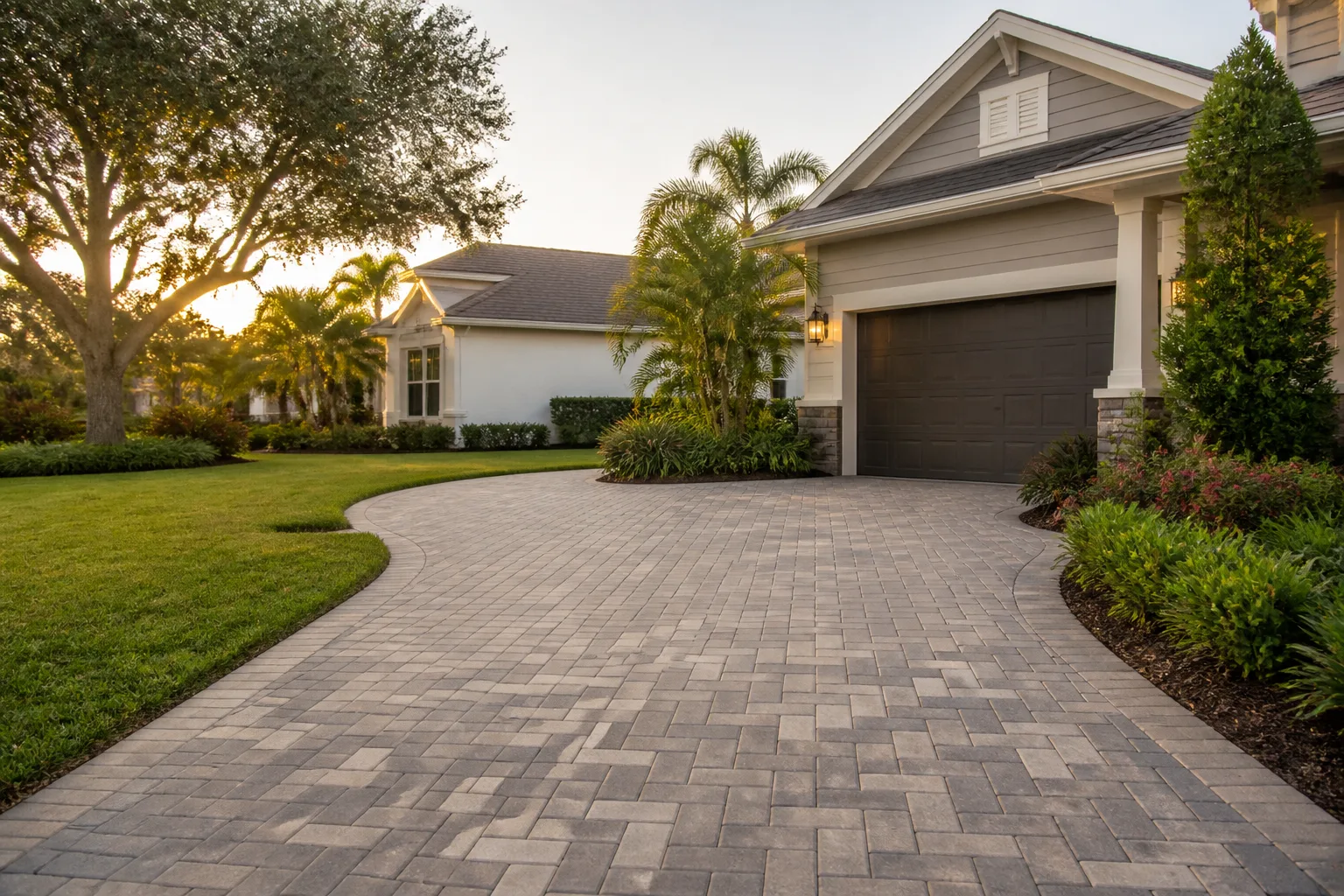
A crew can physically install 1,000 square feet of pavers in two days. Your “when can I park on it” date is another story. Between base compaction, jointing sand cure, and a city inspection hold, the real calendar time from first phone call to first tire roll is often three to five weeks. That gap surprises nearly every homeowner we work with in San Jose, and it’s the single biggest source of scheduling headaches on paver projects. In this guide we’ll walk through every phase, realistic day counts, how San Jose permit processing affects your start date, and the red flags that tell you a contractor is cutting corners on the parts you can’t see.
Quick Answer
Most driveway paver installations take 5 to 10 working days of active labor once permits are in hand, but the full project timeline from contract signing to drivable surface usually runs 3 to 5 weeks in San Jose. The extra time comes from permit review, excavation and base prep, compaction passes, jointing sand cure, and the final inspection. Plan for a month, and you’ll rarely be disappointed.
Styles & brands we work with
- Kitchen remodeling
- Bathroom remodeling
- Home additions & ADU
- Roofing
- Windows & doors
- Driveway & pavers
- Fence
Table of Contents
- Phase-by-Phase Timeline: What Actually Happens
- How San Jose Permits Affect Your Start Date
- Bay Area Weather and Cure Delays
- Installation Complete vs. Fully Drivable
- How Square Footage and Design Complexity Shift the Timeline
- Red Flags in Contractor Timelines
- How to Schedule Around Your Project
- Common Mistakes to Avoid
Phase-by-Phase Timeline: What Actually Happens
Here’s the honest breakdown of a typical 400-600 square foot driveway replacement in San Jose. Day counts assume a single crew on-site and clear weather. Larger driveways or ones with significant slope get padded along the way.
- Permit application and review (5 to 15 business days): The City of San Jose requires a permit for new driveways and major replacements, especially when the approach apron touches the sidewalk or public right-of-way. Simple replacements with no footprint change move faster than new construction or anything affecting drainage. This phase runs in parallel with material ordering.
- Site protection and demolition (1 day): Crews protect landscaping, cut and break out the old surface, and haul the debris off. On a 500 square foot driveway, expect one full day, maybe two if the old slab is heavily reinforced.
- Excavation and grading (1 to 2 days): We dig to the correct depth for your paver profile. A typical residential driveway needs 6 to 8 inches of excavated depth to accommodate base, bedding sand, and paver thickness. Native soil conditions in San Jose matter here – parts of Willow Glen and Almaden sit on heavy clay that must be over-excavated and replaced with import base.
- Base installation and compaction (1 to 3 days): Crushed aggregate goes down in lifts, usually 2 to 3 inches at a time. Each lift gets compacted with a plate or roller. A solid base is 4 to 6 inches of compacted aggregate – and the time to do it right is where lazy crews shave days they can’t spare.
- Bedding sand and screeding (half day): A 1-inch layer of bedding sand gets screeded flat over the base. This is the smooth, even surface the pavers sit on.
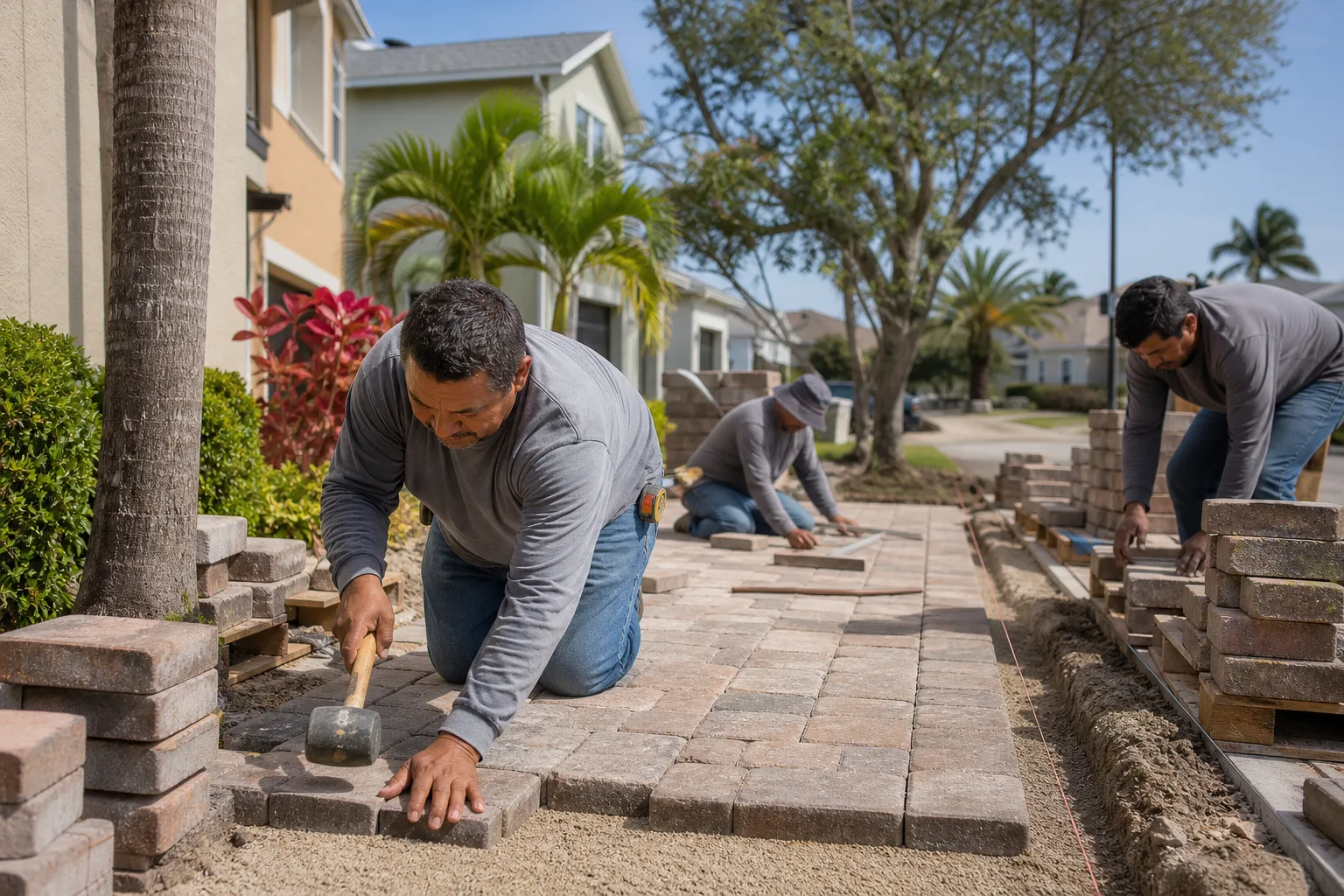
- Paver laying (1 to 3 days): For 500 square feet, an experienced crew sets pavers at roughly 200 to 300 square feet per day. Herringbone and fan patterns take longer than a running bond. Border courses and cuts around curves add hours.
- Edge restraint (2 to 4 hours): Concrete or plastic edge restraint gets pinned along the perimeter. This is what keeps the field from spreading under tire load.
- Final compaction (1 to 2 hours): A plate compactor runs over the finished field to seat the pavers into the bedding sand. This pass is critical and often skipped by crews cutting corners.
- Joint sand application (1 to 2 hours): Polymeric or regular joint sand sweeps into the gaps, gets compacted again, and then either cures or gets misted with water.
Total active labor on a standard San Jose driveway: five to ten working days. The schedule above assumes everything goes right, which is why we typically quote a two- to three-week window for the labor portion alone.
How San Jose Permits Affect Your Start Date
The permit is almost always the long pole in the tent, and it’s the piece most homeowners don’t think about until it delays them. San Jose’s Planning, Building, and Code Enforcement department reviews driveway permits through its online portal, and the turnaround depends on how much of the work touches public infrastructure.
Here’s what drives your review timeline:
- Replacement in kind: Same footprint, same drainage, no sidewalk work. Fastest approvals, often 5 to 10 business days.
- Widening or new driveway: Changes the apron, curb cut, or sidewalk. Longer review, typically 10 to 20 business days, and may trigger a separate encroachment permit.
- Slope or drainage changes: Anything that alters how water drains from your property. Adds engineering review and weeks.
- Historic districts: Properties in the Hensley, Reed, or other designated historic areas face additional architectural review that can push the timeline out significantly.
Two things you can do to accelerate the process:
- Gather your parcel and site information before the first call. A contractor who has to chase down your lot lines, drainage plan, or HOA restrictions loses days to paperwork you could have provided in an afternoon.
- Apply early, before you’re emotionally committed to a start date. We file permit applications the same week a contract is signed. Homeowners who wait until “spring is almost here” to lock in a contractor often wait an additional two or three weeks in the review queue behind everyone else who had the same idea.
Good contractors pull the permit themselves and pull it in the homeowner’s name so the record stays clean for resale. If your contractor suggests skipping the permit to save time, that’s a firing offense – it will surface at inspection or at sale, and you’ll pay for it either way.
Bay Area Weather and Cure Delays
San Jose’s Mediterranean climate is a gift for most outdoor projects. We get roughly 300 sunny days and the rainy season usually runs November through March. But Bay Area rain hits paver schedules harder than you’d guess because it doesn’t just stop the work – it resets the clock on the base.
Here’s what actually happens when it rains mid-project:
- Before excavation: No big deal. Crews pause for a day or two and catch up.
- During excavation and grading: If the native soil takes on water before the base goes down, you’re looking at 2 to 4 days of dry-out time, sometimes more on clay-heavy lots in Cambrian and Almaden Valley. Compacting wet subgrade is a recipe for settling later.
- After base but before pavers: The compacted aggregate base becomes a sponge. A day of drying and re-compaction gets you back on track.
- During joint sand application: Polymeric sand must cure for 24 to 48 hours without rain. An unexpected shower that catches the sand wet can force a complete re-application.
We watch the 10-day forecast obsessively in the wet season and schedule base work accordingly. If a rain system is projected to arrive in the middle of your project, the smart move is often to push the start two or three days and lose less time than you’d lose to wet subgrade. Homeowners who want to avoid this entirely should target April through October for paver work in San Jose – the dry window is generous and reliable.
Installation Complete vs. Fully Drivable
This distinction trips up nearly everyone. “Installation complete” and “fully cured and drivable” are two different milestones, and the gap between them matters a lot if you’re scheduling movers, deliveries, or a party.
Here’s the difference:
- Installation complete: Pavers are laid, edge restraint is pinned, compaction is done, joint sand is in. The driveway looks finished. Crews have packed up. This is often what a contractor means by “we’re done.”
- Joint sand cured: Polymeric sand needs 24 to 48 hours of dry weather to set, sometimes longer depending on humidity. This is why most crews recommend staying off the driveway for at least 24 hours after installation.
- Fully drivable for full weight: After 48 to 72 hours, the surface handles passenger vehicle traffic normally. Heavy trucks, dumpsters, or delivery vehicles should wait a full week or call ahead to make sure compaction is complete.
For a standard San Jose paver driveway:
- Do not walk on it for the first 12 hours.
- Light foot traffic is fine after 24 hours.
- Passenger cars can park on it after 48 to 72 hours.
- Heavy vehicles and moving trucks should wait 5 to 7 days.
If you’re planning to move into a home with a new paver driveway, or if you’re scheduling a delivery of appliances or furniture, tell your contractor the date up front. We routinely pad the “drivable” date by a few extra days for homeowners with tight logistics. It’s easier to plan a cushion than to fight a moving truck stuck in the street.
How Square Footage and Design Complexity Shift the Timeline
Square footage drives labor days, but design complexity can add a surprising amount on top. Here’s how it breaks down in our experience across San Jose driveways:
- Under 300 square feet: 3 to 5 working days of active labor. Often a side yard or single-car strip. Permits may not be required if you’re replacing in kind.
- 300 to 600 square feet: 5 to 8 working days. The most common San Jose driveway size. Standard permits apply.
- 600 to 1,000 square feet: 8 to 12 working days. Larger lots, typically in Almaden Valley, Evergreen, or the Los Altos-adjacent hills.
- Over 1,000 square feet: 12 to 18 working days. Estate driveways, long approaches, circular driveways. Often quoted in phases.
Now add the complexity multipliers:
- Herringbone pattern: 15 to 25% more lay time than running bond.
- Curved borders or radius edges: Custom cuts slow the field crew.
- Multiple paver colors or inlay designs: Adds sorting and layout time.
- Significant slope: Requires stepped courses, extra base work, and often additional drainage features.
- Tight access: A driveway accessible only through a narrow side yard means smaller equipment and slower haul-outs. Common in dense downtown San Jose neighborhoods like Naglee Park and Rose Garden.
- Integrated drainage: Channel drains, French drains, or permeable paver sections add a day or two.
We quote all of this up front in a written line-item estimate – no change orders, no “we hit a surprise” phone calls mid-project. If your contractor won’t put the complexity multipliers in writing, expect a surprise bill.
Red Flags in Contractor Timelines
Here’s the uncomfortable part. Some contractors quote wildly short timelines not because they’re efficient but because they’re cutting corners on the work that determines whether your driveway lasts 10 years or 30. Watch for these signals:
- “We can have it done in three days.” For a 500 square foot driveway starting from demo, that timeline is only possible by skipping compaction passes, using too little base, or ignoring the permit. Base alone should take 1 to 3 days.
- “You don’t need a permit for a replacement.” Sometimes true, often not. San Jose requires permits for most driveway work. A contractor who avoids the permit is hiding from inspection.
- “We’ll use whatever sand is available.” Bedding sand should be a specified grade. Cheap concrete sand substitutes badly and settles unevenly.
- “We joint sand and get out.” Polymeric joint sand needs two compaction passes and a careful water misting. A crew in a hurry to the next job skips the misting and the sand washes out within a year.
- “Rain won’t be a problem.” Bay Area weather is not something any honest contractor shrugs at. A crew that ignores the forecast is a crew that will install on wet base and leave you with settling.
- “The inspection is just a formality.” It’s not. Inspectors catch bad base depth, improper drainage, and code issues that fail the final and force a redo – usually at your expense if you’ve already paid the final draw.
- Vague start dates and no written contract. A real contractor gives you a project window, a written scope, and a payment schedule tied to milestones, not to “when work starts.”
Ask every contractor you interview: how many compaction passes on the base, what sand, how long between final compaction and joint sand, and when will the permit be pulled. If they can’t answer in specific terms, that’s your answer.
How to Schedule Around Your Project
You’ll live with dust, noise, and a blocked driveway for a couple of weeks. Scheduling well means coordinating three things: the contractor’s start window, the permit timeline, and your own household logistics.
- Lock in the contract and permit application in the same week. The earlier the permit goes in, the earlier the crew can start.
- Plan to park on the street for the duration. In most San Jose neighborhoods, a two-week street parking stretch is fine. In permit-parking areas like parts of downtown, or in HOAs with strict rules, you need to clear this with the city or your association two weeks ahead.
- Reschedule deliveries and services. Garbage pickup, food delivery, landscaping crews, and mail carriers all need a heads-up. We notify garbage service on the homeowner’s behalf when the driveway will be blocked on pick-up day.
- Don’t plan movers around “installation complete.” Plan around “fully drivable” – usually 3 to 5 days after the crew packs up.
- Save the big landscaping projects for after. Lawn edging, planting beds, and irrigation work should happen after pavers, not before. Schedule the new fence or garden bed for the following month.
- Budget for a two-week weather buffer if you’re installing November through March. Assume rain will hit and schedule accordingly. April through October, you can plan tighter.
If your project is part of a larger home improvement push – kitchen, bath, or an addition – sequencing matters. For a sense of how trades overlap when you’re layering projects, see our guide to Home Additions & ADU in San Jose. Pavers are often the last exterior item, tucked in after the structure is closed up and the yard is cleared.
Common Mistakes to Avoid
- Booking the start date before the permit is in hand. Two weeks of permitted review can slip your actual start by a month if your contractor is running a full production calendar. Get the permit filed early, or you’ll sit in the queue while everyone else’s spring driveway gets built first.
- Scheduling a move or delivery for “installation complete.” Joint sand needs 24 to 48 hours to cure and pavers need 48 to 72 hours before they take car weight. Add a week of buffer and you’ll never have a moving truck stuck in the street because the driveway isn’t ready.
- Ignoring the rainy season. Base compaction on wet clay subgrade produces settlement that shows up as dips and rocking pavers within a year or two. San Jose gets most of its rain between November and March – anyone promising a fast December install without a weather plan is rolling the dice with your money.
- Hiring the cheapest quote without asking about base depth. A quote that’s $1,500 cheaper than the next one is often $1,500 cheaper because the base is 3 inches instead of 6. Within two winters you’ll pay for that savings in repairs, and no workmanship warranty covers a base that was under-built.
- Skimping on the edge restraint. The concrete or plastic edge is what holds the paver field together. A crew that skips it or installs it loosely is a crew that expects the pavers to spread out of the driveway in a few years.
- Choosing pavers by color only. Paver grade, thickness (60mm for driveways, 80mm for heavier loads), and freeze-thaw rating all matter. In the South Bay we don’t get heavy freezes, but UV stability in a sunny climate absolutely matters – cheap pavers fade within three summers.
- Forgetting the fence or landscaping. If the new driveway borders a fence that’s on its last leg, plan the replacement before the pavers go in. Ripping out fence posts after the pavers are set means tearing up edge courses. Our Fence Installation in San Jose team regularly coordinates with homeowners to sequence both projects.
See the difference
 Before
 After
 Before
 After
 Before
 After
When to Call a Professional
Paver installation looks straightforward from the outside, but the parts that determine lifespan – excavation depth, base compaction, edge restraint, drainage – are the parts homeowners can’t easily see or verify. If your driveway has significant slope, drainage issues, or abuts public infrastructure, call a professional. If you’re replacing an in-kind driveway and have no construction experience with compacted base and bedding, call. If your quotes vary by 40% or more between contractors, call – that much spread usually means somebody is cutting base depth, skipping the permit, or both. And if you’re planning a paver driveway as part of a larger yard or home project, bringing in a full-scope contractor early saves you from sequencing mistakes that cost more to fix than the driveway itself.
Groundwork Construction Co. of San Jose offers free estimates in San Jose – call (833) 988-3521. We answer every call live, 24/7, and we put the full scope in writing before work starts. You can also review our Driveway & Pavers in San Jose page for material options and brand partners.
Frequently Asked Questions
Most driveway paver projects in San Jose take 5 to 10 working days of active labor once the permit is approved, and 3 to 5 weeks total from contract signing to drivable surface. The labor days are the easy part to estimate. The variable is the City of San Jose permit review, which runs 5 to 20 business days depending on whether the apron, sidewalk, or drainage are affected. Rain during the base-installation window adds another 2 to 4 days of dry-out on top. Call (833) 988-3521 for an exact timeline based on your driveway and current San Jose permit backlogs.
No, and any contractor who offers to “install right over” your old slab is skipping the part that makes pavers last. Pavers require an excavated, compacted aggregate base to lock into, and setting them directly over cracked concrete leads to uneven settling, edge movement, and premature failure within a few years. Tear-out is 1 to 2 days of extra labor, and it’s worth every day. If a bid includes pavers over existing concrete, ask hard questions before signing.
You can walk on new pavers after 24 hours and drive a passenger car on them after 48 to 72 hours, but heavy vehicles and moving trucks should wait 5 to 7 days. Polymeric joint sand needs 24 to 48 hours of dry weather to cure, and compaction needs a few days to fully set. If you’re scheduling a move, a delivery, or a party, add a week of buffer to your contractor’s completion date. Call (833) 988-3521 and we’ll build your drivable date into the project plan from day one.
Yes, most driveway paver replacements and all new driveways in San Jose require a permit from the Planning, Building, and Code Enforcement department. Simple in-kind replacements sometimes qualify for a faster over-the-counter review, but anything affecting the apron, curb cut, sidewalk, or drainage requires a full permit and inspection. Never hire a contractor who suggests skipping the permit – it will surface at final inspection or resale, and you’ll pay either way. Our team pulls every permit and schedules every inspection as part of the standard scope.
Rain doesn’t just stop the crew – it resets the drying clock on the compacted base and joint sand. A day of rain on clay-heavy subgrade in neighborhoods like Almaden Valley or Cambrian can force 2 to 4 days of dry-out before crews can safely compact again, and wet polymeric joint sand may need a full re-application. The Bay Area’s rainy season runs November through March, so if your project is scheduled in that window, plan a two-week weather buffer and ask your contractor how they’re watching the forecast. April through October is much more forgiving.
Installation complete means pavers are laid, edge restraint is set, and joint sand is applied – roughly 5 to 10 working days of crew time. Fully cured and drivable means the joint sand has set and compaction has settled, which is 48 to 72 hours later for passenger vehicles and up to a week for heavy vehicles. Scheduling a move or a big delivery around “installation complete” is the number one cause of stuck trucks in San Jose driveways. We build the drivable date into the written schedule up front. Call (833) 988-3521 for a free estimate and a realistic timeline.
The Bottom Line
The paver driveway timeline you should plan for in San Jose is 3 to 5 weeks from contract to fully drivable, with 5 to 10 of those days being active labor on a standard 400 to 600 square foot driveway. Permits run 5 to 20 business days depending on scope and current City of San Jose backlogs. Weather holds add 2 to 4 days during the rainy season. Joint sand cure adds another 2 to 3 days before heavy vehicles can drive on the surface. The contractors who surprise you are the ones who quote three-day installs and skip compaction, base depth, or the permit – all three come back to haunt you within a winter or two. A written line-item estimate, a realistic calendar, and a workmanship guarantee backstopped in writing are how you protect a five-figure investment. Our Groundwork Construction Co. of San Jose home page has the full scope of what we build.
Call (833) 988-3521 for a free estimate. We answer live, 24/7, and we’ll get your permit filed the same week you sign.
Written by the team at Groundwork Construction Co. of San Jose.