Last updated November 18, 2026
Free written scope consultation - allowances, timeline, and change-order rules on paper before a single trade is scheduled
The Complete Bathroom Remodeling Guide for San Jose Homeowners
Here’s the expensive surprise most San Jose homeowners hit six weeks into a bathroom remodel: the fixtures already sitting in their garage aren’t legal to install. San Jose has its own water efficiency rules, and they’re stricter than what most design inspiration feeds show. A 2.5 gallon-per-minute showerhead you bought on sale can fail inspection and get sent back. This guide covers what generic remodeling articles skip: the permit thresholds that apply in San Jose, the specific gallons-per-flush and gallons-per-minute numbers you have to hit, real 2024 cost ranges by scope, the waterproofing decisions that decide whether your bathroom lasts 10 years or 30, and how to survive a remodel when it’s your only full bath.
Quick Answer
A bathroom remodel in San Jose typically runs $12,000 to $28,000 for a mid-range full renovation, with cosmetic refreshes landing around $4,000 to $9,000 and full gut-and-rebuilds reaching $45,000 and up. Most projects that relocate plumbing, change the footprint, or replace a shower valve require a building permit through San Jose’s planning department, and every fixture you install must meet the city’s water efficiency thresholds. Working with a licensed contractor who pulls permits and knows the local code cuts the odds of a failed inspection and a stalled job.
Styles & brands we work with
- Kitchen remodeling
- Bathroom remodeling
- Home additions & ADU
- Roofing
- Windows & doors
- Driveway & pavers
- Fence
Table of Contents
- Do You Need a Permit for a Bathroom Remodel in San Jose?
- San Jose Water Efficiency Rules: What You Can Actually Install
- How Much Does a Bathroom Remodel Cost in San Jose?
- Waterproofing and Substrate: The Decisions That Determine Longevity
- Sequencing a Remodel When It’s Your Only Full Bath
- What Triggers Plan Check vs. Over-the-Counter Approval
- How to Choose a Bathroom Remodeling Contractor in San Jose
Do You Need a Permit for a Bathroom Remodel in San Jose?
You need a building permit any time you move plumbing, add or relocate a fixture, replace a shower valve, alter framing, or change the electrical layout in a bathroom. A pure cosmetic refresh (paint, tile over an existing sound substrate, a new vanity that reuses the existing supply and drain) usually doesn’t need one. The line between those two categories is where most homeowners get tripped up, and in San Jose that line is enforced.
Here’s the practical breakdown of what typically requires a permit:
- Moving a toilet, sink, or shower drain – permit required, plus inspection of the rough-in before the walls close up.
- Relocating or adding electrical outlets, GFCI receptacles, or exhaust fans – permit required for the electrical scope.
- Replacing a shower or tub valve – this is a plumbing alteration and typically triggers a permit. Slipping past it works until a water-damage claim examines the record.
- Removing or adding a wall – always a permit, and if the wall might be load-bearing you’ll need a structural review.
- Converting a tub to a walk-in shower – almost always a permit, because the drain and waterproofing assembly change.
- Painting, new flooring, a like-for-like vanity swap – typically no permit needed.
We’ve seen homeowners in Willow Glen and Rose Garden save a little money by skipping permits on a valve replacement, then lose far more when they tried to sell and the buyer’s inspector flagged unpermitted plumbing. San Jose’s building department is reachable and clear about scope; a five-minute phone call before you start beats a headache on resale. Pull the permit. It’s part of how a real professional operates.
San Jose Water Efficiency Rules: What You Can Actually Install
San Jose enforces California’s water efficiency standards and adds local pressure on top. The thresholds you have to meet before a fixture passes inspection are concrete, and they’re different from what a lot of the country installs:
- Toilets: 1.28 gallons per flush maximum for standard models. Dual-flush toilets need to average and verify at or below that threshold on the full-flush cycle.
- Showerheads: 1.8 gallons per minute at 80 PSI. This is stricter than the federal 2.5 GPM standard, and it’s the one that catches out-of-state purchases.
- Bathroom faucets: 1.2 gallons per minute, with a maximum 1.5 GPM for public-use styles that residential buyers sometimes end up with by accident.
- Urinals (rare in homes, common in ADU or workshop baths): 0.5 gallons per flush.
Here’s the part that costs people money. Most national fixture brands sell “California compliant” versions of the same model you see on a design blog, and the SKU is different. The 2.5 GPM showerhead on the shelf at a big-box store in Nevada is not the same listing as the 1.8 GPM model sold in San Jose. If your contractor buys the wrong one, you’re eating a restocking fee and a delay at the rough-in inspection.
How to Verify Before You Buy
- Look for the “WaterSense” label on the box or spec sheet. WaterSense certification is the fastest compliance check.
- Check the flow rate printed on the product spec, not the marketing description. “Water-saving” on a box means nothing without a number.
- Confirm the model number against the manufacturer’s California-specific listing. Kohler, for example, publishes separate compliant product lists, and local suppliers carry them.
- Hand the spec sheet to your contractor before purchase, not after. Your contractor has seen this fail before.
San Jose’s water rules exist because the city has been under drought pressure for decades. The upside: high-efficiency fixtures have caught up on performance. A modern 1.8 GPM showerhead feels like a 2.5, and a 1.28 GPF toilet flushes cleaner than the old 3.5 models ever did. The rules are a gift to your water bill, not a burden.
How Much Does a Bathroom Remodel Cost in San Jose?
Bathroom remodel pricing in San Jose runs roughly 15 to 25 percent higher than the national average, driven by labor rates, permit fees, and the tight contractor market across the South Bay. Here are the ranges we see in 2024 broken out by scope:
- Cosmetic refresh (paint, tile, fixtures, same layout, no permit): $4,000 to $9,000 for a hall or guest bath. A primary bath at the top of that range.
- Mid-range full renovation (new tile throughout, new vanity, new tub or shower assembly, some electrical, permit): $14,000 to $28,000. This is where most San Jose projects land.
- Reconfiguration (moving plumbing, converting tub to shower, relocating the layout): $22,000 to $38,000.
- Full gut-and-rebuild (down to studs, new subfloor, new everything, high-end finishes): $45,000 to $75,000+, with the upper end hitting when multiple fixtures move and a load-bearing wall comes out.
Cost drivers that surprise homeowners in San Jose specifically:
- Permit fees. A bathroom permit runs $400 to $1,200 depending on scope, and it’s a line item on the quote. Expect to see it, and don’t accept a quote that hides it.
- Subfloor repair. Older homes in areas like Willow Glen and Cambrian have decades-old subfloor that frequently needs replacing once the tile comes up. That’s $800 to $2,500 that rarely shows up in an initial estimate.
- Water efficiency upgrades that trigger connected changes. Installing a 1.28 GPF toilet is fine, but if your drain line is undersized for a modern flow rate (rare but possible in older stock), you’ll be reworking the drain.
- Structural surprises. If the wall you want gone is load-bearing, add $4,000 to $12,000 for a beam and a structural engineer’s stamp.
No-hassle upfront pricing means the number on the quote is the number you pay. Groundwork Construction Co. of San Jose writes fixed, line-item estimates with the permit fee and disposal line itemized, and the 730-Day Done Right Promise backs every project whether you spend $9,000 on a refresh or $60,000 on a rebuild.
Waterproofing and Substrate: The Decisions That Determine Longevity
The most expensive decisions in a bathroom remodel are the ones made before the tile goes down, and design guides almost never mention them. Waterfinding its way behind a tile wall is the number one cause of bathroom failure, and it’s invisible for years. Get the substrate and membrane right and the remodel lasts 20 to 30 years. Get it wrong and you’re pulling it out in seven.
The core components to know before your contractor starts:
- Substrate. Cement backer board or a modern foam board (like a bonded waterproofing panel) behind the tile, not drywall and not “green board” anywhere water hits. Green board is moisture resistant, not waterproof, and it fails behind a shower wall.
- Membrane system. Either a liquid-applied waterproofing membrane applied in the shower pan and walls, or a sheet membrane installed over the substrate. Both work well when installed correctly and both fail badly when installed wrong. The membrane has to be continuous across the shower floor and up the walls past the showerhead.
- Drain flange height. This is where sloppy jobs fail. The drain flange has to sit flush with the finished tile surface, not the substrate. If it’s set too low, water pools under the tile bed; too high and the tile sits proud. Getting this wrong is a silent leak that shows up as a stained ceiling below.
- Slope. The pre-slope under the pan membrane has to pitch toward the drain at a minimum quarter-inch per foot. A flat pan traps water.
In our experience across San Jose homes, shower failures almost always trace back to the drain flange or a membrane that got punctured during the tile set and never resealed. If your contractor can’t tell you the membrane system and drain model they’re using before the job starts, that’s a warning sign. Ask the question. The 730-Day Done Right Promise is here for exactly this reason, because we’ve seen what a properly waterproofed shower looks like 15 years in, and we’ve seen what a shortcut looks like eight months in.
Sequencing a Remodel When It’s Your Only Full Bath
If your home has one full bath and the remodel is that bath, you’re in a different game from someone with a second bath. Standard advice about “just live around it” doesn’t apply; your only shower is offline for the duration. Here’s how San Jose homeowners actually pull this off, and how scheduling changes when you don’t have a fallback.
A realistic demolition-to-usable timeline for a mid-range full bath:
- Week 1: Demo and rough-in. Tile out, fixtures out, plumbing and electrical rough-in done, inspection called.
- Week 2: Inspection and waterproofing. Rough-in inspection signed off, substrate and membrane installed.
- Week 3 to 4: Tile and finish. Tile set, grout, and the slow cure time before shower use.
- Week 5: Fixtures and trim. Vanity, toilet, showerhead, glass, paint, final inspection.
When it’s your only bath, compress by design. Sequence the plumbing inspection for a Monday so it doesn’t sit over a weekend. Choose a shower assembly that’s in stock locally rather than a special-order unit with a six-week lead time. Have the toilet and vanity delivered to the site before demolition starts, so nothing waits on a truck. And don’t schedule over a holiday week, because the inspection calendar and your trusted plumber both thin out.
Where Do You Shower and Use the Toilet During the Job?
Plan for temporary facilities before demo, not the morning of. Options that San Jose homeowners use: a gym membership for the shower weeks, a portable toilet rented for the side yard (runs $120 to $250 for a 30-day rental), and a prearranged arrangement with a neighbor or family. For the toilet itself, if the drain location isn’t moving, you can often have a working toilet back in place within five to seven days. If you’re moving the drain, plan for two to three weeks without one. Build that into your decision about scope: a layout change is worth it if it bothers you every day of the next 20 years, but it costs you two weeks of bathroom access now.
What Triggers Plan Check vs. Over-the-Counter Approval
San Jose’s building department processes bathroom permits two ways. Some jobs go over the counter, meaning the plan is reviewed and approved in a single visit. Others go to plan check, which is a formal multi-week review. Knowing which bucket your project falls into lets you budget time honestly.
Over-the-counter approval applies to straightforward bathroom permits: fixture replacements, same-layout tile work, single-fixture relocations that don’t affect structure or egress. Assuming your scope is clean, an over-the-counter permit can be issued in days, not weeks.
Plan check applies when the bathroom touches something structural or safety-critical:
- Removing any wall that could be load-bearing, requiring a structural engineer’s plans and stamp
- Adding a bathroom in an ADU or converting a space into a bath
- Changes that affect the home’s egress or window size in a sleeping-adjacent area
- Significant electrical scope that triggers a separate electrical permit and plan
- Any change to a bathroom serving an ADU, which brings the ADU’s own permit history into review
Plan check can add four to eight weeks to the front of a project. If you’re planning a bathroom in a new home addition or ADU in San Jose, build that review time into your schedule from day one. A contractor who knows how San Jose’s department processes plans will tell you which bucket you’re in before you sign anything, not after the permit stalls.
How to Choose a Bathroom Remodeling Contractor in San Jose
The most common cause of a bathroom remodel going badly isn’t materials or design. It’s a contractor who disappears or a quote that quietly grows. Here’s what to check before you sign, and the questions that separate a real pro from a problem.
- Ask who pulls the permit. The licensed contractor should pull it in their name. If the answer is “you can pull it as the homeowner,” walk. That’s a way of putting the liability on you.
- Get a line-item written estimate. Not a lump-sum number. The quote should show demolition, rough-in plumbing, electrical, substrate and waterproofing, tile labor, tile material if included, fixtures, permit fee, and disposal. A quote that’s one line is a quote hiding something.
- Ask which waterproofing system they use. If they can’t name it, they haven’t thought about it.
- Confirm licensing and insurance. The local pro is licensed and insured as California requires, with workers’ comp coverage. Ask for the cert before work begins.
- Get the warranty in writing before demo. The 730-Day Done Right Promise exists because a workmanship warranty that lives only in a conversation isn’t a warranty.
- Look for background-checked, uniformed technicians on every project. That’s who’s in your home for weeks. Professional presentation is not a luxury; it’s a signal about how the company operates.
Groundwork Construction Co. of San Jose answers calls with a live person, 24/7, so you don’t leave a message and get a callback Tuesday. Every project is covered by the 730-Day Done Right Promise, we pull permits and see them through inspection, and we work with brand partners like Kohler for fixtures and KraftMaid for vanities so the material choices are compliant and built to last. Free estimates include a design consult, plus $1,000 off projects over $10,000 and 0% financing for 18 months, so a larger remodel is financially accessible without a hidden surprise buried in the paperwork. Our technicians have up to 12 years of experience, and a good contractor should be able to walk you through a full bathroom estimate, show the permit path, and set a realistic schedule before you sign.
Common Mistakes to Avoid
- Buying fixtures before confirming water efficiency compliance. The 2.5 GPM showerhead on the shelf doesn’t pass San Jose inspection. Verify the spec sheet against the 1.8 GPM showerhead and 1.28 GPF toilet thresholds before checkout.
- Skipping the permit on a “small” plumbing change. A shower valve replacement without a permit is unpermitted work, and it surfaces at resale. The city will see it in the inspection history, and you’ll pay more to fix it than the permit would have cost.
- Choosing tile before waterproofing. The system underneath decides whether the shower lasts. Pouring budget into tile and skipping the membrane and drain flange detail is how seven-year failures happen.
- Not budgeting for subfloor repair in older San Jose neighborhoods. Homes in Willow Glen and Cambrian have old subfloor that frequently needs replacement once tile comes up. Laying new tile over soft wood guarantees a repeat job.
- Ignoring the only-bath reality. Committing to a five-week remodel when it’s your only shower, with no temporary arrangement, means living through the job and hating it. Plan facilities before demo day.
- Signing a one-line estimate. A single-number quote hides scope and invites change orders. Insist on line-item pricing with permits and disposal shown.
- Not asking about plan check upfront. If the wall you want gone could be structural, plan check adds weeks. Locate the load-bearing wall before you schedule the contractor, not after demo starts.
See the difference
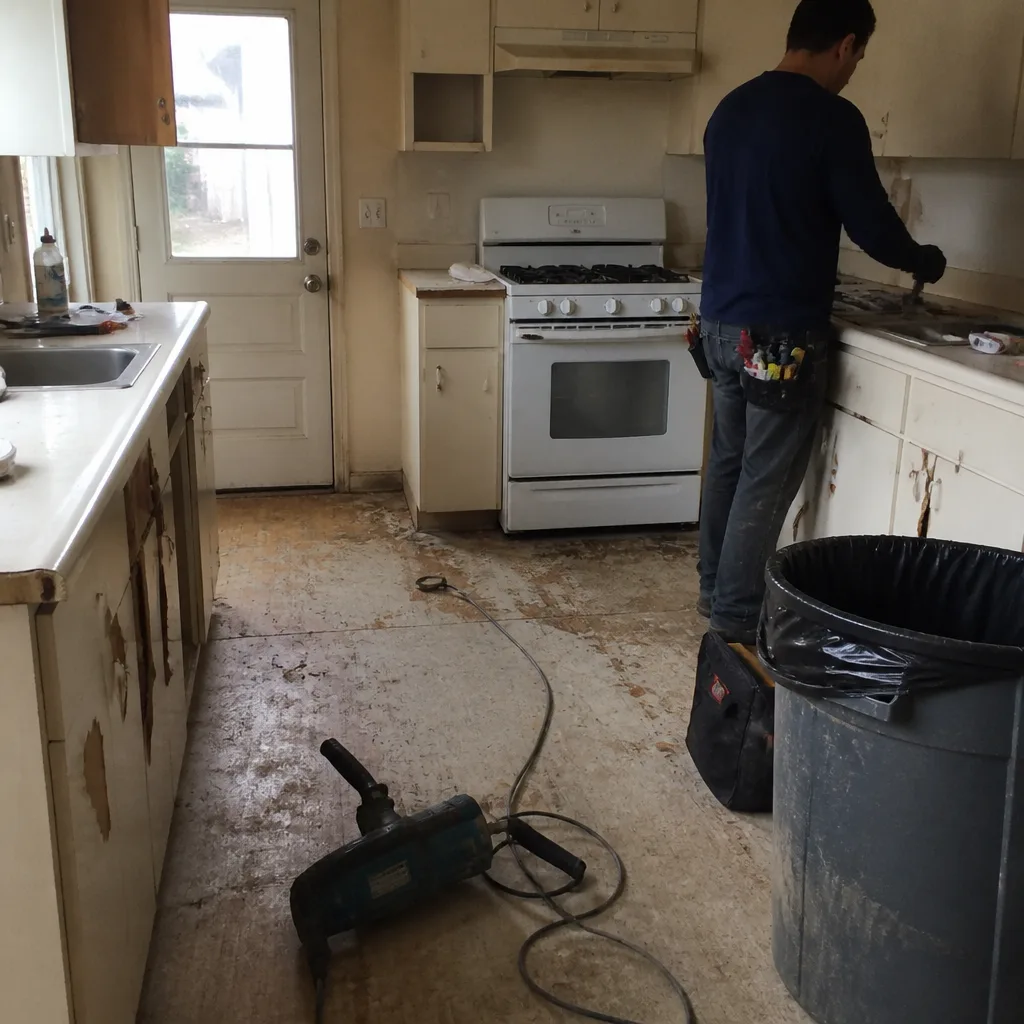 Before
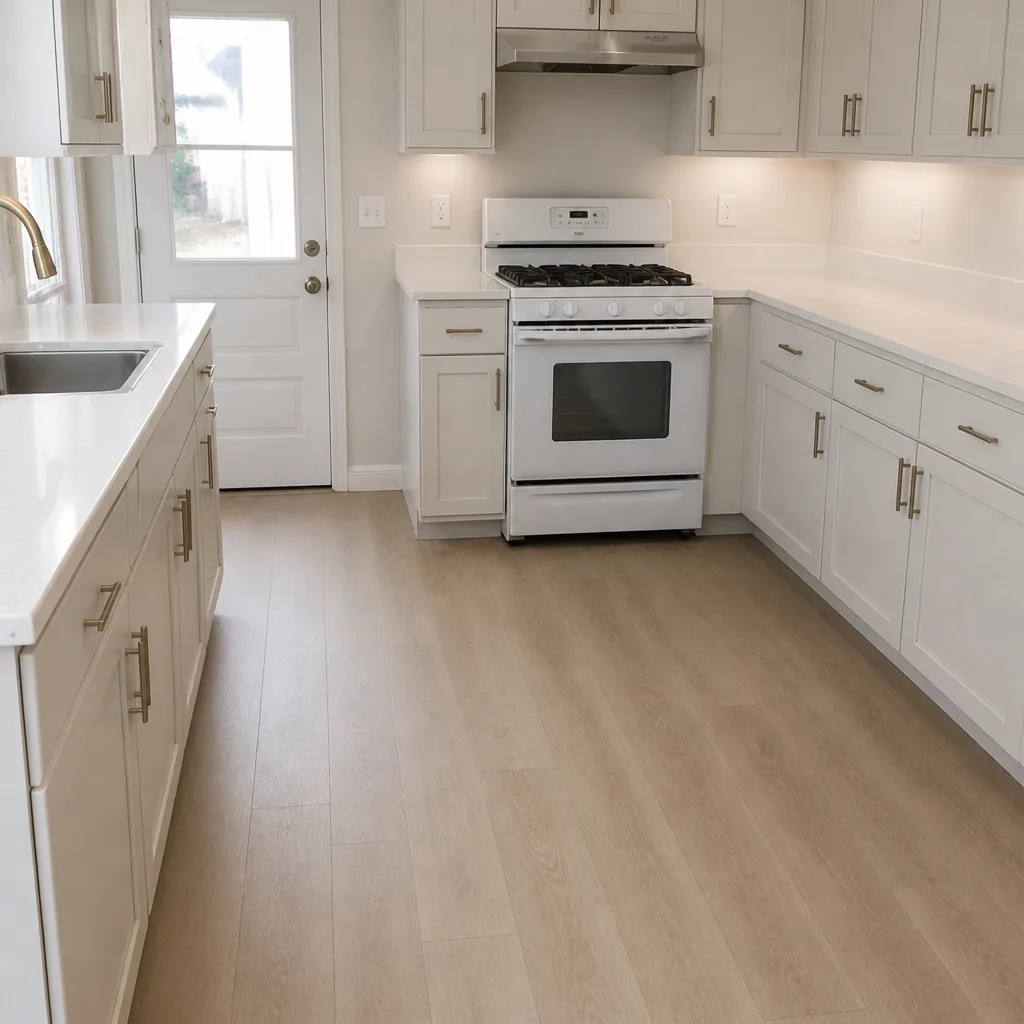 After
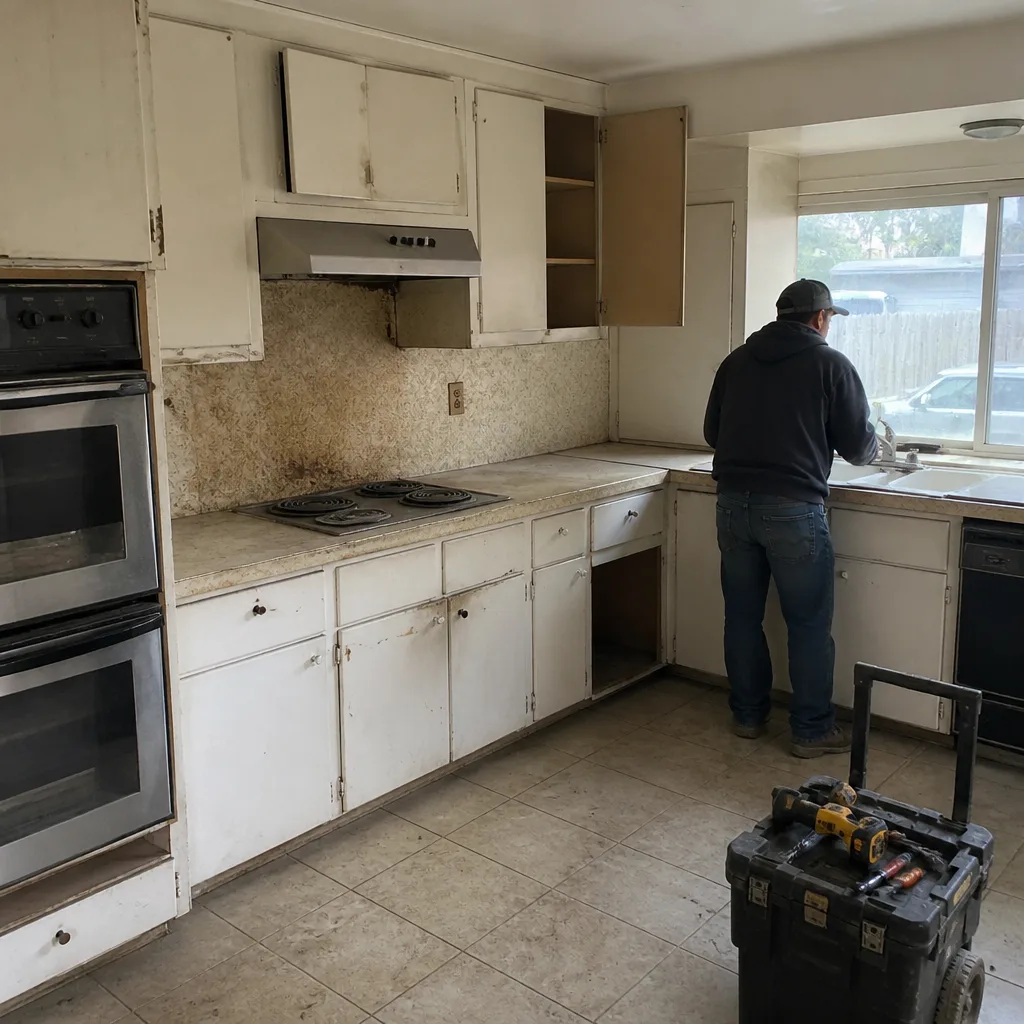 Before
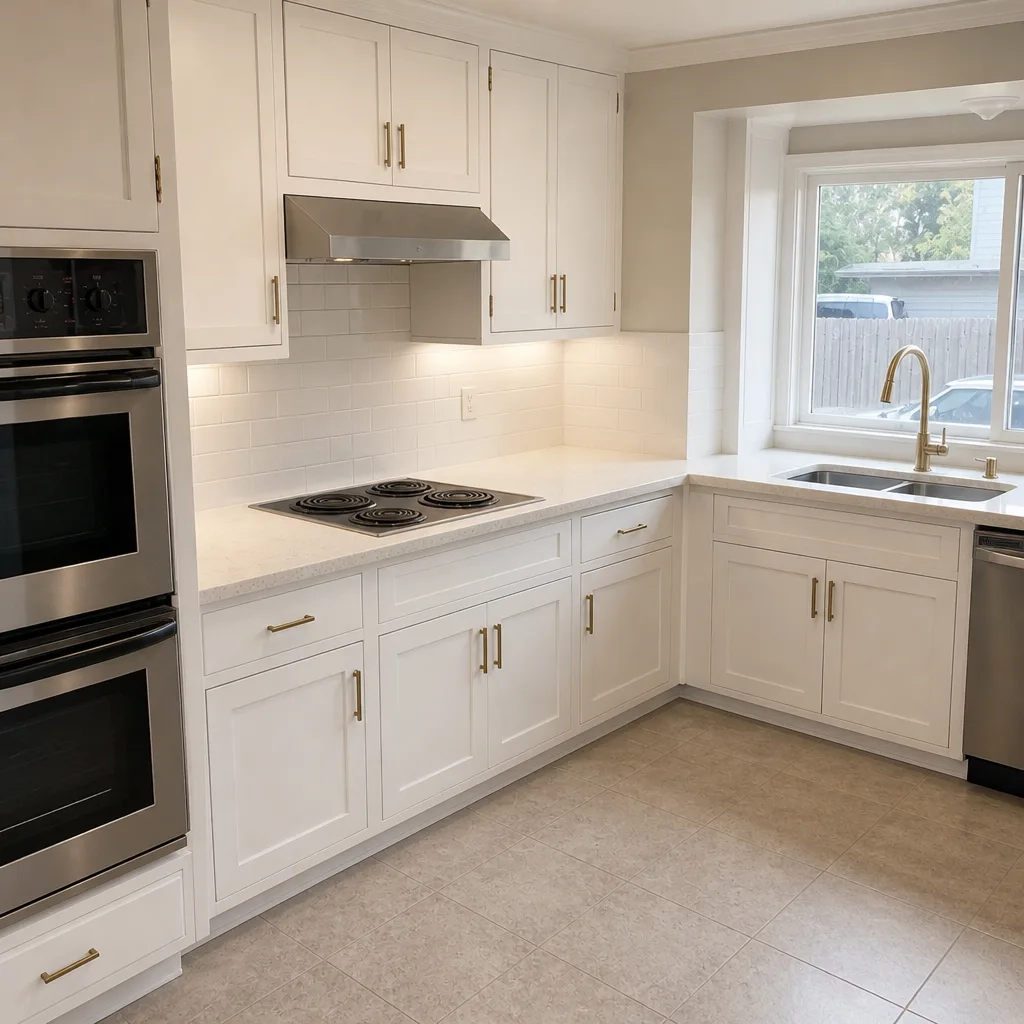 After
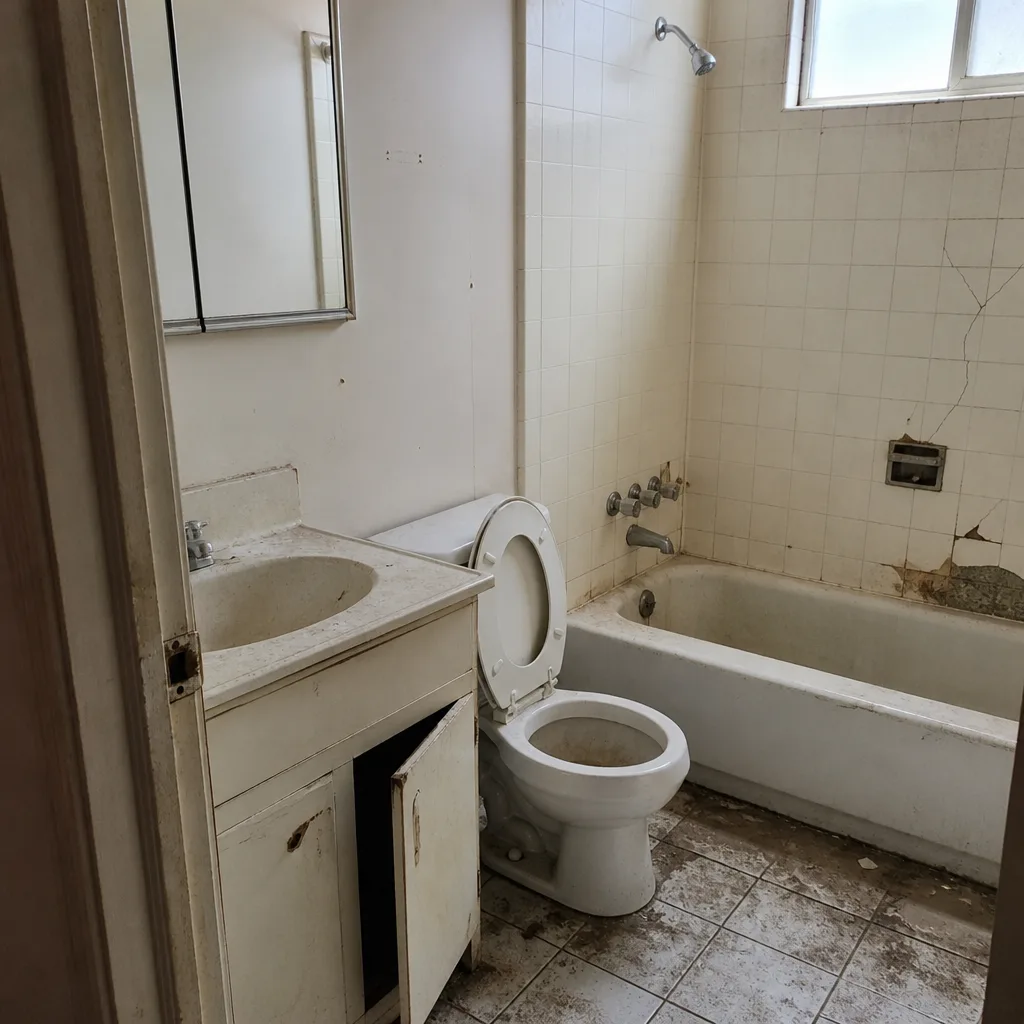 Before
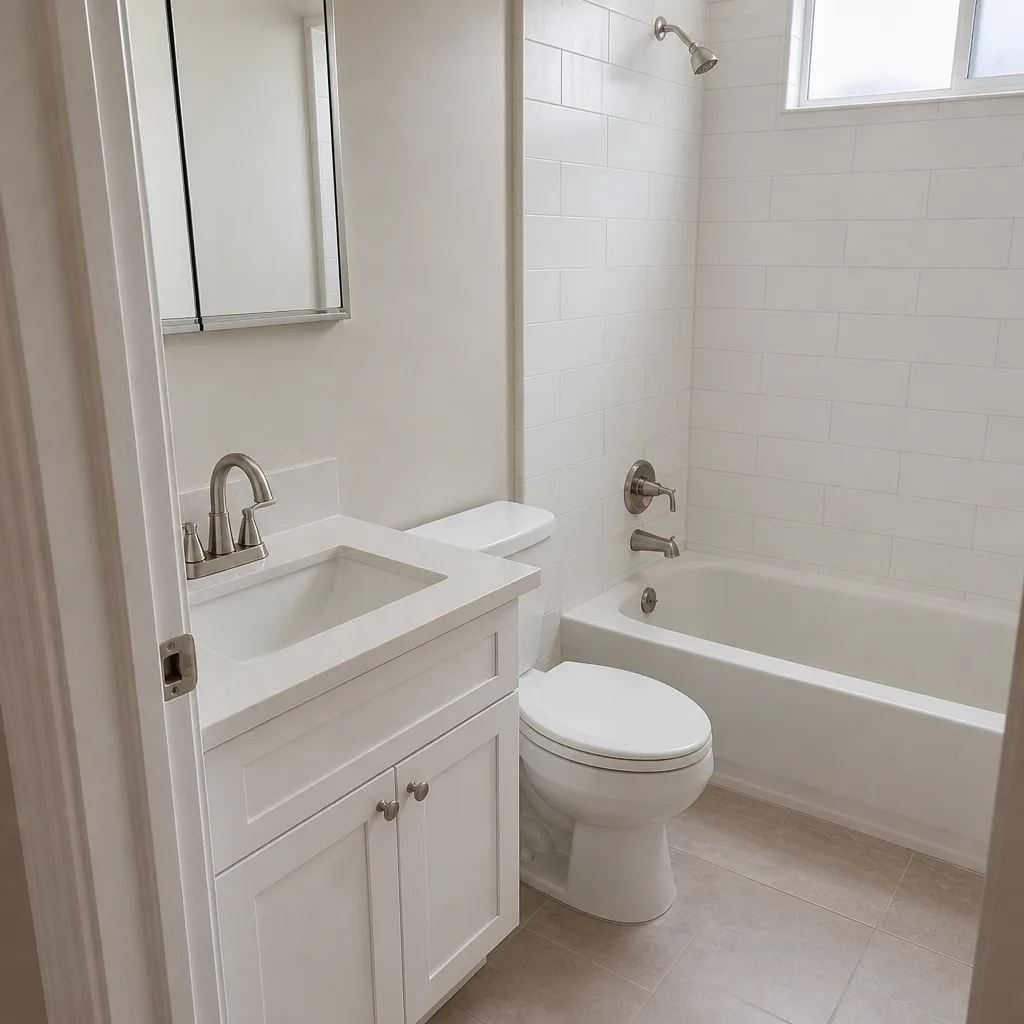 After
When to Call a Professional
Some bathroom work is genuinely DIY: paint, a like-for-like vanity swap that reuses existing supply and drain lines, a new toilet installed on an existing flange. Most of the rest of a real remodel involves work where a mistake is costly or dangerous. Call a professional when plumbing moves, when a wall comes out, when electrical changes, when the shower assembly is being rebuilt, or when the permit requires an inspection signed off by a licensed contractor. Gas lines, electrical panels, and any structural change are flat-out not DIY territory. San Jose’s permit process requires a licensed contractor for the plumbing and electrical scope, and the inspection record matters at resale. Groundwork Construction Co. of San Jose offers free estimates in San Jose – call (833) 988-3521 to schedule yours, and get the scope, permit path, and schedule in writing before you commit.
Frequently Asked Questions
A full mid-range bathroom remodel in San Jose runs $14,000 to $28,000, a cosmetic refresh lands at $4,000 to $9,000, and a full gut-and-rebuild with high-end finishes reaches $45,000 to $75,000+ depending on scope and fixture moves. Permit fees run $400 to $1,200 and should appear as a line item. Call (833) 988-3521 for a free estimate with line-item pricing.
Yes, if you’re moving plumbing, adding or relocating a fixture, replacing a shower valve, changing electrical, or removing a wall. A cosmetic refresh that reuses existing supply and drain lines typically doesn’t need one. When in doubt, pull the permit; unpermitted work creates problems at resale. Call (833) 988-3521 to talk through your scope.
San Jose enforces California water efficiency standards: 1.28 gallons per flush maximum for toilets, 1.8 gallons per minute for showerheads, and 1.2 gallons per minute for bathroom faucets. Verify the model spec sheet before purchasing; out-of-state purchases frequently fail inspection. Call (833) 988-3521 and we’ll help confirm compliance before you buy.
It shouldn’t. A good contractor provides a fixed, line-item estimate and honors it, with the only exceptions being preexisting conditions the estimate didn’t cover (subfloor failure found after demo, for example) and changes you request to scope. Groundwork Construction Co. of San Jose provides no-hassle upfront pricing with written line-item quotes, plus the 730-Day Done Right Promise. Call (833) 988-3521 for your free estimate.
A mid-range full bathroom typically takes four to six weeks from demo to final inspection, with plan-check projects adding four to eight weeks at the front end. Over-the-counter permits can be issued in days. If your only bath is off-line, plan the schedule around the shower and toilet gaps. Call (833) 988-3521 to get a realistic schedule for your scope.
Yes. The licensed contractor pulls the bathroom permit in their name, coordinates inspections, and sees the work through final sign-off; that’s part of the job, not a favor. The local pro is licensed and insured as California requires. Call (833) 988-3521 for a free estimate that includes the permit path.
The Bottom Line
A bathroom remodel in San Jose comes down to four decisions: the scope (what you’re really changing), the permit path (over-the-counter vs. plan check), water efficiency compliance (1.28 GPF, 1.8 GPM, 1.2 GPM thresholds verified before purchase), and the waterproofing system (substrate, membrane, drain flange). Budget $14,000 to $28,000 for a standard renovation, add $6,000 to $20,000 for structural or reconfiguration surprises, and build a schedule that accounts for the only-bath problem. Choose a contractor who pulls permits, prices in writing, and backs the work with a warranty you can hold. From foundation to finish line, that’s how a San Jose bathroom gets built to last, backed in writing.
Ready to plan your San Jose bathroom remodel? Call Groundwork Construction Co. of San Jose at (833) 988-3521 for a free estimate and design consult. No-hassle upfront pricing, permits pulled, and the 730-Day Done Right Promise on every job. We’re also here for the rest of the home: see our Groundwork Construction Co. of San Jose home, Driveway & Pavers in San Jose, and Fence Installation in San Jose.
Written by the team at Groundwork Construction Co. of San Jose.