
Grohe Driveway & Pavers in San Jose: A Homeowner’s Guide
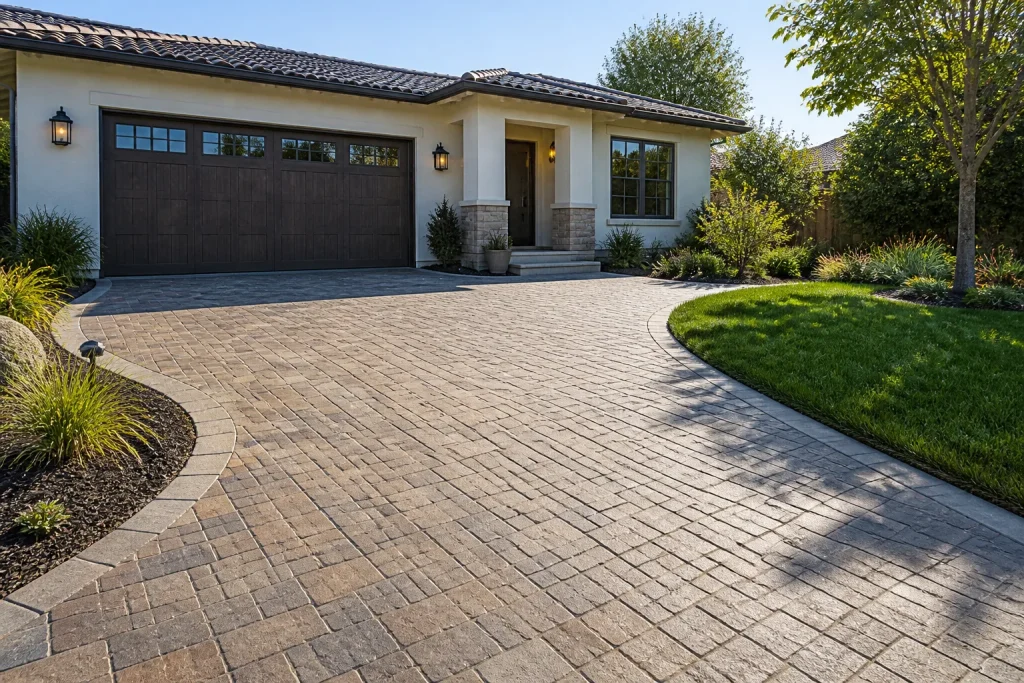
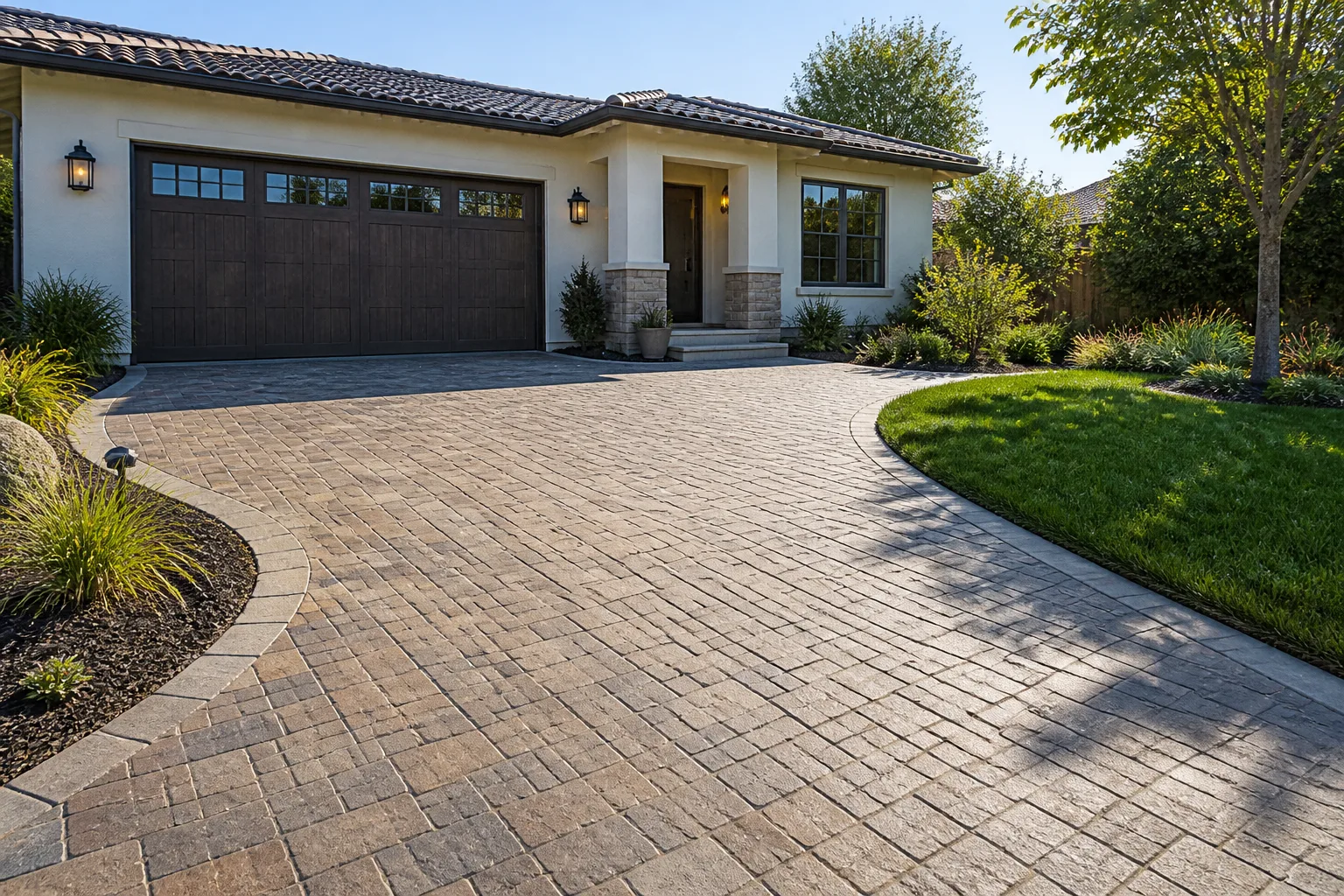
Most homeowners choose pavers from a color sample in a showroom, then spend the second winter re-leveling them. The finish coat gets all the attention, but the brand and system underneath is what decides whether a San Jose driveway stays flat for twenty years or turns into a patchwork of rocking stones. Grohe paver systems are engineered around how water and soil actually behave, which matters more in San Jose than almost anywhere in the Bay Area. This guide explains why the specification is the decision, not the color.
If you’d rather have a pro sort out the details, call (833) 988-3521 for a free estimate. No pressure, just answers.
Why does the paver brand matter more than the color in San Jose?
San Jose sits on some of the trickiest residential soil in California. The expansive clay that runs through Willow Glen, Cambrian, and Almaden Valley swells when it’s wet and shrinks when it dries, and that seasonal movement is what cracks driveways and pops pavers out of alignment. A paver’s interlocking tolerances, base compatibility, and drainage design are what absorb that movement. Color is cosmetic. The system is structural.
Grohe builds its residential paver lines with tighter dimensional tolerances than commodity pavers, which means the joints lock more precisely and the load spreads across the whole field instead of concentrating at individual stones. On San Jose’s clay, that difference shows up as fewer heaves, fewer loose corners, and a driveway that doesn’t need re-sanding every spring.
What we look at when specifying a paver system for a San Jose home:
- Dimensional tolerance: how closely each paver matches the next, which determines joint consistency and interlock strength.
- Base compatibility: whether the paver is engineered for a compacted aggregate base that can handle clay subgrade movement.
- Drainage path: how water exits the system, not just how fast it runs off the surface.
- Freeze-thaw and wet-dry rating: San Jose’s wet winters and bone-dry summers are a milder version of the same stress that breaks pavers in colder climates.
We’ve pulled pavers out of driveways in Willow Glen where a beautiful color choice was installed over an undersized base with a generic stone. Two winters later, the joints had opened and the whole field was rocking. The homeowners didn’t pick the wrong color. They picked the wrong system.
How do Grohe interlocking tolerances perform on San Jose’s expansive clay?
Grohe’s interlocking tolerances are tight enough that the paver field behaves like a single surface rather than a collection of individual stones. On expansive clay, that matters because the soil beneath is never truly static. A driveway that flexes as one unit distributes the movement. A driveway made of loose-fitting pavers concentrates it at the joints, which is exactly where failures start.
In Cambrian and Almaden Valley, we routinely see driveways that were laid with wide joints and a thin base. The first wet season opens the joints, the second season shifts the field, and by the third the homeowner is calling about re-leveling. Grohe’s tighter tolerances don’t eliminate soil movement, but they give the installation a fighting chance to ride it out.
What actually determines performance on clay:
- Excavation depth. The base has to be deep enough to bridge the active clay layer, which varies by lot.
- Base compaction. Compacted in lifts, tested, not guessed.
- Edge restraint. A proper edge keeps the field from spreading under load.
- Paver tolerance. Tight dimensional control keeps joints consistent across the whole field.
Three of those four are installer decisions. The fourth is the brand. That’s the point: a premium paver installed to spec performs. A premium paver installed loosely performs like a cheap one. If you want the full scope of what a properly built San Jose driveway involves, our Driveway & Pavers in San Jose page lays out the process from excavation to final compaction.
Do permeable Grohe systems help with Santa Clara County stormwater rules?
Permeable Grohe paver systems can help San Jose homeowners meet Santa Clara County stormwater requirements, particularly on projects that increase impervious surface area. The county and city both care about how much rainwater runs off a property versus how much soaks in, and a permeable paver system lets water pass through the joints and base rather than sheeting off into the storm drain.
This isn’t a small detail in San Jose. As more of the valley gets built out, stormwater management has moved from an afterthought to a real line item on residential projects. A permeable system can reduce the amount of runoff a driveway generates and, depending on the project, may reduce the need for separate detention or infiltration measures.
When permeable pavers make sense for a San Jose driveway:
- The lot has clay soil that drains poorly and ponds after storms.
- The project adds significant hardscape to a property that’s already close to its impervious coverage limit.
- The homeowner wants a driveway that handles winter rain without a river running to the street.
- The design calls for a base that can store and slowly release water rather than shed it.
Permeable systems require a specific base design and grading to work. They’re not a drop-in replacement for a standard driveway, and installing them wrong creates a worse problem than conventional pavers. If you’re weighing permeable against conventional, get a site assessment first. The soil profile on your lot decides more than the product brochure does.
Residential vs. commercial Grohe pavers: which makes sense for a home driveway?
Grohe’s residential paver lines are designed for driveways, walkways, and patios on single-family homes, with thickness and load ratings matched to passenger vehicles and typical residential use. The commercial lines are built for heavier loads, repeated traffic, and tighter maintenance schedules. For most San Jose homes, the residential line is the right call. For some, it isn’t.
The commercial line makes sense when:
- The driveway serves an RV, boat, or heavy trailer on a regular basis.
- The property has a steep grade that concentrates load at the transition.
- The homeowner plans a future ADU, which can change the traffic pattern and load on the drive.
- The driveway doubles as a turnaround for delivery vehicles or service trucks.
Here’s where it gets interesting: if you’re planning a Home Additions & ADU in San Jose, the driveway spec should account for the finished project, not just what’s there today. We’ve seen homeowners install a residential driveway, then add an ADU two years later and discover the drive can’t handle the construction traffic or the new vehicle load. Specifying commercial-grade pavers at the outset costs more upfront and less overall.
Most San Jose driveways are fine with the residential line. The point is to make the call deliberately rather than by default.
How do Grohe warranties interact with installer workmanship warranties?
Grohe’s product warranty covers manufacturing defects in the paver itself. It does not cover installation failures, base problems, or movement caused by soil conditions. That distinction is the single most important thing to understand before you sign a contract, because the two warranties cover different things and a gap between them is where homeowners get stuck.
The installer’s workmanship warranty covers the labor and the base. If a paver cracks because of a defect, that’s the product warranty. If the driveway heaves because the base wasn’t compacted correctly, that’s the workmanship warranty. If a paver cracks because the base failed underneath it, you have a product claim and a workmanship claim, and you need both parties to stay accountable.
What voids Grohe coverage and what voids a workmanship warranty:
- Improper base preparation voids the workmanship warranty and often the product warranty too, depending on how the failure is characterized.
- Inadequate drainage design can void product coverage because water damage isn’t a manufacturing defect.
- Substitute materials installed in place of specified Grohe pavers void the product warranty entirely, since the warranty follows the product.
- Failure to follow installation guidelines is the most common reason a claim gets denied.
This is where a written, long-horizon workmanship guarantee matters. Our 730-Day Done Right Promise covers the workmanship for two years, and if something isn’t done right, we make it right. That’s one of the longest workmanship guarantees in residential construction, and it’s designed to sit alongside the product warranty, not in place of it. Before you hire anyone for a Grohe installation in San Jose, ask what their workmanship warranty covers and how long it runs. If the answer is vague, keep asking.
What questions should you ask a contractor before they install Grohe pavers?
Ask whether they’re an authorized Grohe installer and whether they’ll install the specified product or an “equivalent.” Those two questions separate contractors who install Grohe to spec from contractors who use the brand name in a bid and substitute a cheaper paver at delivery.
In our experience, the substitute problem is common. A homeowner gets a bid that names Grohe, then the crew shows up with a different pallet because the specified color was “on backorder.” By the time the driveway is finished, the homeowner has paid for one product and received another, with no warranty coverage on the substituted material.
Questions worth asking before you sign:
- Are you an authorized Grohe installer, and can you show the product spec for my project?
- Will you put the specific Grohe product line and model in the contract, with a no-substitution clause?
- How deep will you excavate, and how will you compact the base given the clay on my lot?
- What’s your workmanship warranty, and does it cover base failure and drainage issues?
- How do you handle product warranty claims if a paver fails?
- Will you pull the permits and schedule the inspections?
We answer all six before a contract is signed. Upfront pricing, written line-item quotes, and no change orders unless you approve them. If you want a sense of how we approach other exterior work, our Fence Installation in San Jose page covers the same discipline applied to fencing.
When to call a pro
If a driveway in San Jose is heaving, holding water after storms, or showing open joints, the fix isn’t re-sanding. Those are signs the base or the drainage design has failed, and that’s a rebuild, not a repair. The same goes for any permeable system that’s ponding, or any driveway that’s shifting against the garage slab. Call a professional before the damage spreads to the foundation or the garage floor.
Related services in San Jose: if you’re planning exterior work alongside the driveway, our Fence Installation in San Jose and Home Additions & ADU in San Jose teams work from the same spec discipline.
The Bottom Line
The brand underneath the finish coat determines how a San Jose driveway performs through wet winters and dry summers on expansive clay. Grohe’s tighter interlocking tolerances and permeable system options are a real fit for the soil and stormwater realities in Willow Glen, Cambrian, and Almaden Valley, but the installation has to match the specification. A premium paver installed loosely performs like a cheap one, and a workmanship warranty that doesn’t cover base failure isn’t really a warranty.
We install Grohe to spec, with a no-substitution clause in the contract, a written workmanship guarantee, and permits and inspections handled. Our technicians have up to 12 years of experience, and we stand behind the work with the 730-Day Done Right Promise. If you’re in San Jose and need help, Groundwork Construction Co. of San Jose offers free estimates. Call (833) 988-3521.
Frequently Asked Questions
Most Grohe paver driveways in San Jose run roughly $14 to $22 per square foot installed, with permeable systems and commercial-grade lines at the higher end. The range swings on excavation depth, base requirements for your lot’s clay, and drainage design. Call (833) 988-3521 for an exact quote on your driveway. Estimates are free.
Yes, with the right base design. Permeable pavers over clay require a deeper engineered base and careful grading so water has somewhere to go during a wet winter. On lots with heavy clay, the base design matters more than the paver itself. A site assessment before design prevents a system that ponds instead of drains.
Usually not. Grohe’s product warranty covers manufacturing defects, not installation failures, base problems, or soil movement. If a paver fails because the base wasn’t compacted correctly, that’s a workmanship claim against the installer, not a product claim. That’s why the installer’s workmanship warranty matters as much as the product warranty.
A typical San Jose residential driveway takes one to two weeks from excavation to final compaction, depending on square footage, base depth, and drainage design. Permeable systems and commercial-grade installations can run longer. Weather can add days during the rainy season. Most jobs are scheduled in a single continuous block so the base isn’t left exposed.
Written by the team at Groundwork Construction Co. of San Jose.
Need Construction Help?
Call Groundwork Construction Co. of San Jose - the local pro we connect you with is licensed and insured, here with fast after-hours help in San Jose.
(833) 988-3521